Emerging Research Project
Research Overview
My proposed project is a creative exploration of how traditional storytelling can merge with modern technology to create more interactive and engaging experiences. I aim to design a series of graphic design posters inspired by the Greek myth of Orpheus and Eurydice, taking visual and thematic inspiration from the musical Hadestown (created by Anaïs Mitchell). Each poster will incorporate Augmented Reality (AR) features that bring aspects of the story to life when scanned using a mobile device. My motivation for undertaking this project lies in the desire to present mythology in a visually engaging and technologically innovative way that inspires curiosity and encourages audiences to explore cultural stories through creative, interactive formats.
The story of Orpheus and Eurydice is a tragedy tale from Greek mythology which explores themes of love, loss, and devotion. My goal is to reimagine this ancient story through modern design. With attention spans shorter than ever, content that is quick to engage and easy to digest is more likely to capture and retain viewer interest Dodds, D. (2024). Using AR technology creates an opportunity to present stories in a form that appeals to younger audiences.
In the myth, Orpheus uses his music to travel to the underworld to rescue his wife, Eurydice, who has died. Although he convinces Hades to release her, he loses her again when he looks back before reaching the surface. This story provides an emotional and visual foundation for the poster and AR design, allowing themes of hope, tragedy, and beauty to be expressed through the visuals and user interactions.
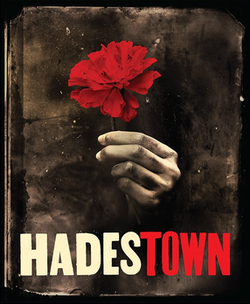
Wikipedia Contributors (2020)
The project will use 8th Wall, a web-based platform that allows for the creation of image-tracked experiences, this means that when a user scans the poster through their phone’s camera, 3D animations built in Blender will appear over the surface of the image/poster. This approach allows me to integrate my graphic design skills in Adobe Photoshop and Illustrator with a new layer of interactivity made possible by AR. Through these tools, I can create posters that are visually appealing and create an interesting way to interact with stories.
The primary audience for this project is people aged 16–22, particularly those with an interest in mythology and art, as well as those curious about new forms of digital media. However, the project is also designed to be accessible to a broader audience, including casual viewers, educators, and anyone interested in innovative uses of design and technology. This demographic was selected because younger audiences are often more open to experimental visual experiences and already familiar with interactive media such as AR filters on platforms like Instagram or Snapchat.
The user experience is a central focus of this project. I want users to be immediately drawn to the poster’s colour, composition, and symbolism and then become curious about its interactivity. whenscanning the poster, users will see 3D models and animations emerge from the surface showing key moments from the myth, such as Orpheus descending into the underworld or turning to face Eurydice. The goal is to evoke a sense of curiosity and wonder, encouraging the user to explore more about the mythology and augmented reality. I aim to design the interface and AR experience so that it feels natural and intuitive, allowing users to move around the scene freely and experience the story from multiple angles.
This project is not only an artistic exploration but also a reflection of broader shifts in communication and experience design. As designers try to create interactive and engaging content, AR has emerged as a powerful tool for shortening the gap between static design and immersive media, according to Wise (2025), AR has become “incredibly common” in digital media, appearing in everything from e-commerce and education to entertainment, this familiarity means that users are comfortable engaging with AR, which makes it an ideal platform for storytelling and cultural education.
My inspiration for this project comes from both artistic and commercial sources. The musical Hadestown reimagines the myth of Orpheus and Eurydice through music, performance, and visual design, its ability to reinterpret a story for modern audiences demonstrates how timeless stories can be remade to be engaging through creative adaptation. Commercially, the Burger King AR advertising campaign serves as a strong case study for how interactive technology can engage audiences. Their campaign used AR to allow users to “burn away” competitor adverts through an app which is a memorable use of interactivity – while my project is non-commercial, this example highlights AR’s potential to capture attention and encourage active engagement.
Overall, this project represents a merge of mythology, design, and digital interactivity, by using it provides an opportunity to experiment with storytelling through technology, making classical narratives more accessible and engaging for a modern audience. The result of this project will be a series of posters that communicate to a viewer visually whilst also inviting viewer participation.
A video explaining the burger king campaign
Bound to Wow (n.d.)
Project Plan
To ensure that the project develops in a structured and achievable way, I created a project plan that outlines the major milestones, tools, and user-centred approaches that will help guide the development of the project. To manage the project effectively, I will adopt a phased workflow, using project management tools such as Trello to track tasks, progress, and deadlines. This method ensures that all stages from concept development to finalising the project are achievable within a certain timeframe.
Because this project combines traditional poster design with AR integration, it requires coordination between visual design software (such as Adobe Photoshop and Illustrator) and digital production tools (such as Blender and 8th Wall) and as each stage builds upon the previous task, having a task management method will help ensure that the result will be one cohesive final product.
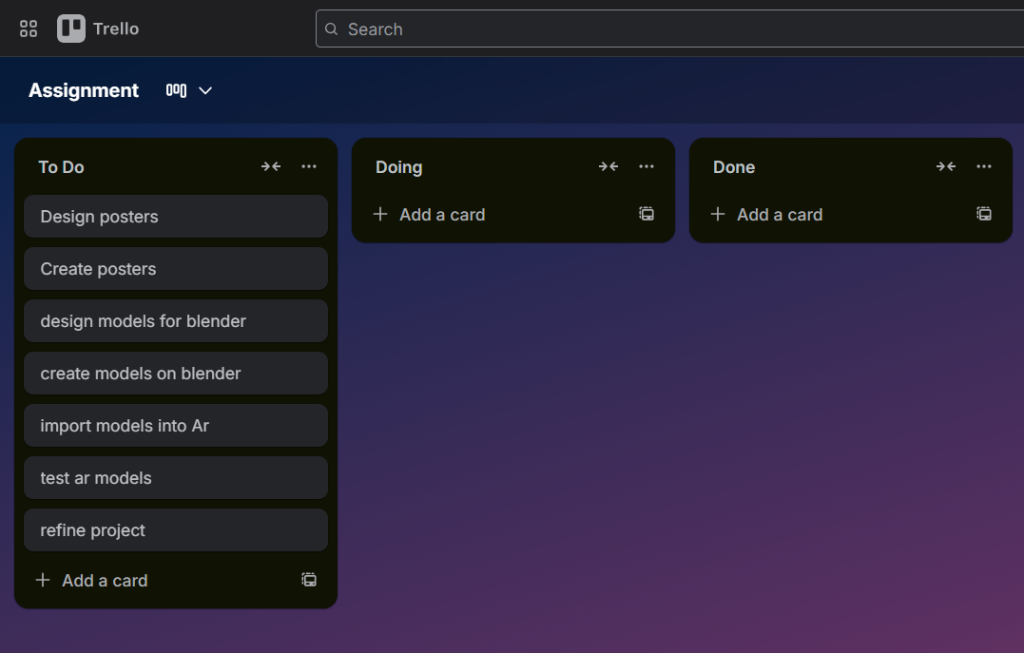
Milestones and Timeline
To ensure a manageable and organised workflow, I have divided the project into four phases, each phase focuses on specific outcomes, allowing for iterative feedback and continuous improvement.
Phase 1: 6th November – 21st November – Designing and Creating Posters
This initial phase will focus on the visual design of the posters. Using Adobe Photoshop and Illustrator, I will experiment with typography, composition, and colour palettes that reflect the tone and emotion of the Orpheus and Eurydice myth. I will also plan the markers that will be the key point for image targeting. This stage will include creating multiple concept sketches and refining them into final poster designs.
Phase 2: 21st November – 11th December – Creating Models and Building AR Products
The second phase will focus on 3D modelling and AR integration. Using Blender, I will create stylised models that represent key figures and settings from the myth – i.e Orpheus, Eurydice, and elements of the underworld- I will then use 8th Wall to integrate these models into the AR experience through image tracking. During this phase, I will conduct small tests to ensure that the 3D elements align correctly with the printed poster.
Phase 3: 11th December – 18th December – Refining and Testing
In this stage, I will focus on polishing the AR experience. This includes improving animation quality, testing usability, and making sure the user experience feels natural and intuitive. During this time, I will gain informal feedback from peers to identify any design or AR issues.
Phase 4: 18th December – 5th January – Contingency and Finalisation
The final phase allows time for addressing any unforeseen challenges, having this time put aside ensures that the project can be refined without rushing or compromising quality.
This structured timeline ensures that the project remains achievable with clear goals at each milestone and can still be made to a high standard. Each phase has been allocated approximately two to three weeks to allow sufficient time for testing and refinement and by using Trello to visualise these milestones as cards and checklists, I will be able to monitor deadlines, maintain accountability, and manage my workload efficiently.
User Stories
To ensure the project remains user-focused, I have developed a few user stories that represent how different target audiences might interact with the posters.
- As a hobbyist, I want to explore visually interesting designs of the story so I can enjoy the myth in a creative and engaging way.
- As someone new to Greek mythology, I want to see a visual summary of the story so I can understand its main themes before exploring it further.
- As a designer or creator, I want to interact with the AR content so I can gain inspiration for my own creative projects or research.
These user stories ensure that the project is not only artistically expressive but also functional and designed for the correct audience as they highlight how users will approach the project from different perspectives – i.e with curiosity, wanting to learn or using it for inspiration- and the AR interaction must cater to each of these reasons.
Tools and Workflow
The project will use a combination of creative design tools and AR development platforms. These tools were chosen for their accessibility, professional capabilities, and compatibility with one another.
- Adobe Photoshop and Illustrator: These tools will be used to design the poster visuals as Illustrator allows for precise vector-based compositions, whilst Photoshop supports detailed image editing and texture work. Both of the software can be used with each other to create a unique design.
- Blender: This 3D software will be used to create the 3D models that will be used in the AR experience. Blender’s modelling and animation features make it suitable for stylised characters and can export the the models into a file format that is compatible with 8th Wall.
- 8th Wall: As a web-based AR platform, 8th Wall allows users to experience AR directly in their mobile browser, meaning users will not need to download an app which makes the project more accessible for users.
- Trello: Used to manage tasks, deadlines, and milestones, each task will be logged on Trello with checklists, due dates, and progress updates. This visual approach to time management ensures that each stage is clearly tracked and the project is on schedule.
Time Management and Organisation
Time management is a crucial part of the project and given that there is a cross-over of designing software and modelling software, I will allocate time within each phase for testing and reviewing, ensuring that any technical issues are addressed before moving forward, similarly, regular check-ins with peers will provide opportunities for feedback on issues I may have missed.
Using Trello’s Kanban-style task board, I will structure tasks under categories such as “To Do,” “In Progress,” and “Completed.” This method offers a clear overview of ongoing priorities and upcoming deadlines, additionally, I plan to document progress weekly through screenshots, test renders, and notes, which will help with reflection and evaluation in the later stages of the project.
Section 3: Concept Storyboard
A storyboard is useful in visualising how the user will interact with the poster and experience the story through augmented reality, the storyboard serves as both a creative and technical guide by helping to ensure that each stage of user engagement is thoughtfully designed. For this project, the storyboard focuses on illustrating the user journey from the initial moment the viewer encounters the poster up to their full engagement with the interactive AR scene.
Storyboard Frames and User Journey
Each frame in the storyboard represents a key moment in the user’s interaction with the poster and the myth. The storyboard consists of six main frames, each of which builds upon the previous to create a smooth, immersive experience that blends storytelling and design.
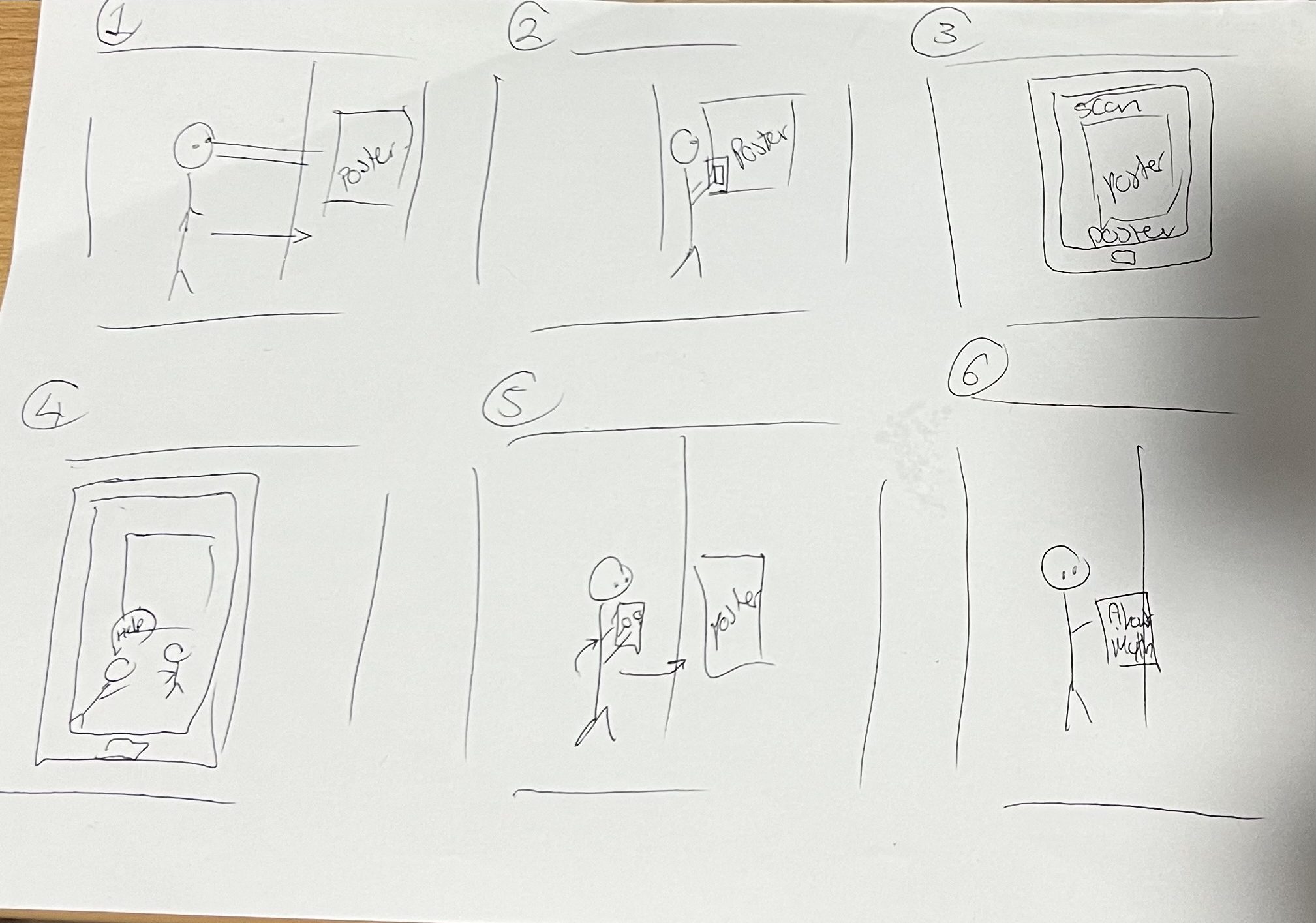
Frame 1 – Discovery
The user first encounters the poster, either displayed in a gallery, classroom, or public space. The poster immediately captures attention with its composition and colour palette, reflecting both the vibrancy and the melancholy of the myth. Subtle hints such as AR markers or call to actions (e.g., “Scan to reveal the story”) invites the user to interact with the poster. At this point the poster must function as a standalone design piece that is capable of catching the audiences eyes without interactivity. The tone and imagery of the poster should hint at the myth’s themes – such as love and loss – through symbolism, typography, and texture.
Frame 2 – Activation
Intrigued by the visuals, the user takes out their smartphone and opens the AR scanner, this moves the viewer from passive observation to active participation. The process should feel intuitive, quick, and rewarding.
Frame 3 – Scanning
As the camera focuses on the poster, the AR technology detects the design as a marker image, This is the point at where the poster transforms from a static print into a piece of live storytelling.
During this moment, audio cues such as faint ambient sounds or a soft musical tone could enhance the users immersion.
Frame 4 – AR Animation Appears
Once the AR has been activated, the 3D models created in Blender begin to appear on top of the poster and users witness key scenes – for example, Orpheus reaching out to Eurydice as they walk out of the underworld, or the moment when he turns to look back.
The user can move their phone around the poster to view the scene from multiple perspectives, experiencing the story spatially rather than through a flat image.
Frame 5 – Exploration
At this stage, the user is fully engaged and they can move around the poster to explore the depth and detail of the models. This interaction allows them to notice new aspects depending on their viewpoint, for example, shadows, small environmental elements, or changes in lighting that symbolise the shift between the world of the living and the dead.
The interaction is designed to be intuitive and and encourages exploring the scene, users who are familiar with AR will instinctively move their device, while people using AR for the first time will quickly understand that the scene responds to their perspective.
This frame focuses on curiosity and discovery which aligns with the project’s aim to make learning about mythology engaging and memorable.
Frame 6 – Reflection
Once the user has explored the AR experience, the goal is for the interactivity to inspire users to seek more information about the myth or explore how AR can be used to retell other cultural stories.
Purpose and Function of the Storyboard
The storyboard serves several purposes within the development process:
- Design Clarity: It helps visualise how the AR elements interact with the printed design, ensuring that all creative and technical aspects are aligned.
- User Flow: It demonstrates the logical flow from discovery to interaction, making sure the experience feels natural and rewarding.
- Narrative Continuity: It preserves the emotional rhythm of the Orpheus and Eurydice myth, ensuring that the story’s themes are conveyed even through short, interactive moments.
- Testing Reference: During production, the storyboard will act as a reference point for testing the functionality and pacing of the AR experience.
The storyboard ensures that the project remains cohesive and purpose-driven.
Design Considerations and Emotional Impact
In designing the storyboard, it was important to balance visual aesthetics with emotional depth. The myth of Orpheus and Eurydice is an emotional story, so the interaction should reflect this through tone and pacing. Visual design elements such as lighting, colour, and movement will be used to symbolise transitions – for example, warm tones fading into cool hues to represent the shift from life to death.
The interaction with the poster should also encourage users to slow down and observe, mirroring the myth’s reflective and tragic nature, rather than fast, game-like engagement. The experience prioritises curiosity, drawing users into the story through atmosphere rather than action.
Accessibility remains a key part of the storyboard’s design process with clear contrasts and simple visual hierarchies to ensure that all users -including those with visual impairments such as colour blindness – can enjoy the interaction. Text overlays will be legible but will allow users to focus on the visuals without distraction.
Overall the storyboard shows the user journey from curiosity to emotional engagement, displaying how the poster transforms from a static design into a living story through AR. By mapping each step visually, the storyboard ensures that the project’s technical and visual elements align to create a cohesive and immersive experience.
Section 4: Ethical, Cultural, and Accessibility Considerations
Ethical, cultural, and accessibility considerations are essential in the design and development of a creative project especially if the project draws on historical or mythological narratives. As this project is inspired by the Greek myth of Orpheus and Eurydice, it links with cultural heritage, creative reinterpretation, and emerging technology which requires a responsible and inclusive design approach to ensure that the final product respects the source material and avoids any cultural insensitivity to allow it to remain accessible to a broad audience.
Cultural Representation and Respect for Mythology
Greek mythology holds a prominent place within global culture and has influenced literature, art, and philosophy for centuries however, adapting narratives into contemporary design formats requires sensitivity and awareness, the story of Orpheus and Eurydice is not just a fictional tale but part of a larger mythological tradition that reflects the values, emotions, and artistic expressions of ancient Greek society as it was written in 6th century BCE (SuperSummary, 2020).
To respect the heritage, the project will avoid oversimplifying or sensationalising the myth and instead it will focus on honouring its emotional depth while presenting them in a modern and accessible format, by keeping symbolic and emotional authenticity, the AR posters can connect users to the ancient story without distorting its meaning.
When working with mythological content, it is also important to avoid cultural appropriation or misrepresentation, whilst Greek mythology is part of a global culture and widely studied, the reinterpretation of ancient stories still carries the responsibility to acknowledge their origins and cultural significance. When creating the project, any visual or narrative adaptations will remain consistent with the spirit of the myth i.e whilst the characters will be reimagined in a stylised form, they will retain symbolic elements such as Orpheus’ lyre and Eurydice’s flowing garments to preserve recognisability and cultural respect.
Ethical Storytelling and Emotional Sensitivity
The myth of Orpheus and Eurydice is inherently tragic and revolves around death, loss, and the limitations of human desire, representing sensitive themes through interactive media requires ethical consideration to avoid trivialising or sensationalising emotional content.
To address this, the AR experience will approach the story with a tone of reflection rather than dramatization and the animations / visuals will focus on emotional resonance – such as Orpheus reaching out for Eurydice or the soft fade of light symbolising loss – rather than literal depictions of distress or violence, this ensures that the story remains poetic and emotional, allowing users to engage thoughtfully rather than reactively.
Additionally, the project aims to encourage empathy and curiosity rather than passive consumption, the AR element does not simply “show” the story as it invites users to explore it, creating a sense of connection with the myth’s emotional themes, by doing this, the project displays ethical storytelling that values reflection and understanding.
Accessibility in Visual and Interactive Design
Accessibility is another core ethical consideration, ensuring that the experience can be enjoyed by as many people as possible, regardless of ability. Designing with accessibility in mind not only broadens the potential audience but also aligns with best practices in inclusive design.
In terms of visual accessibility, particular attention will be paid to colour contrast and readability. The poster designs will use colour palettes that remain distinguishable to users with colour vision deficiencies (such as red-green colour blindness). High contrast between text and background elements will improve legibility, and AR markers will be clearly integrated into the design so that scanning is simple and intuitive.
From an interaction perspective, the project will use simple, natural gestures such as pointing and moving the device rather than complex controls, this ensures that users unfamiliar with AR can still easily navigate the experience. Using 8th Wall’s WebAR platform allows users to access AR directly through a browser, removing the barrier of requiring an app download, additionally, any text displayed within the AR experience will be designed for clarity, with adequate size, spacing, and colour contrast and -where possible- short audio cues or ambient sounds will be added to enrich the experience without overwhelming users or excluding those with hearing impairments. This aligns with the principles of Universal Design, which prioritise products that are usable and enjoyable for everyone, regardless of individual differences. ‘The design is useful and marketable to people with diverse abilities.’ Centre for Excellence in Universal Design (2025).
Ethical Use of Emerging Technology
Finally, ethical design extends to the use of the technology itself, augmented reality can sometimes raise concerns around data privacy, screen time, or digital fatigue, however, this project uses AR in a low-impact, educational context, focusing on storytelling rather than data collection or advertising, users will not be required to input personal data or log in and the experience will be short and self-contained, minimising privacy risks.
The goal is to demonstrate AR as a tool for creative and cultural engagement rather than commercial exploitation and by doing so, the project not only displays an artistic experience but also presents responsible technology use, highlighting how digital media can serve education, storytelling, and cultural appreciation ethically.
Summary
This section establishes the ethical, cultural, and accessibility for the project, by respecting the origins of Greek mythology, approaching emotional themes sensitively, and ensuring visual and technological inclusivity, the project aims to set a standard for responsible design practice in AR storytelling and aims to demonstrate how emerging technology can be used not just innovatively but ethically and inclusively, encouraging curiosity and respect for culture while ensuring all users can participate equally.
References:
Dodds, D. (2024). Short-Form Video Content: Capturing Attention in the Digital Age. Forbes. [online] 19 Mar. Available at: https://www.forbes.com/councils/forbesagencycouncil/2024/03/19/short-form-video-content-capturing-attention-in-the-digital-age/.
Wise, A. (2025). Exploring the Future of Augmented Reality: Trends, Technology, and Impact. Reydar. Available at: https://www.reydar.com/exploring-the-future-of-augmented-reality-trends-technology-and-impact/ [Accessed 2 Nov. 2025].
Bound to Wow (n.d.). One of the most innovative Augmented Reality ADs – ‘Burn That Ad’ by Burger King. [online] Available at: https://www.youtube.com/watch?v=nGU3Z-1zwDM. [Accessed 2 Nov. 2025].
SuperSummary. (2020). Orpheus and Eurydice Summary and Study Guide | SuperSummary. [online] Available at: https://www.supersummary.com/orpheus-and-eurydice/summary/. [Accessed 2 Nov. 2025].
Centre for Excellence in Universal Design (2025). The 7 Principles. [online] Centre for Excellence in Universal Design. Available at: https://universaldesign.ie/about-universal-design/the-7-principles.[Accessed 2 Nov. 2025].
Image reference:
Wikipedia Contributors (2020). Hadestown. [online] Wikipedia. Available at: https://en.wikipedia.org/wiki/Hadestown. [Accessed 2 Nov. 2025].