Collaborating in Web Design
In our eco task, I was part of a three-person team. We began by sharing our initial ideas, but since I didn’t have many at the time, I focused on listening to the concepts proposed by others. After some discussion, we settled on a single concept that we felt had the most potential for development.
Throughout our conversations, I noticed a lack of constructive criticism, which prevented development of our ideas which meant we might not have reached the best possible outcomes for our project.
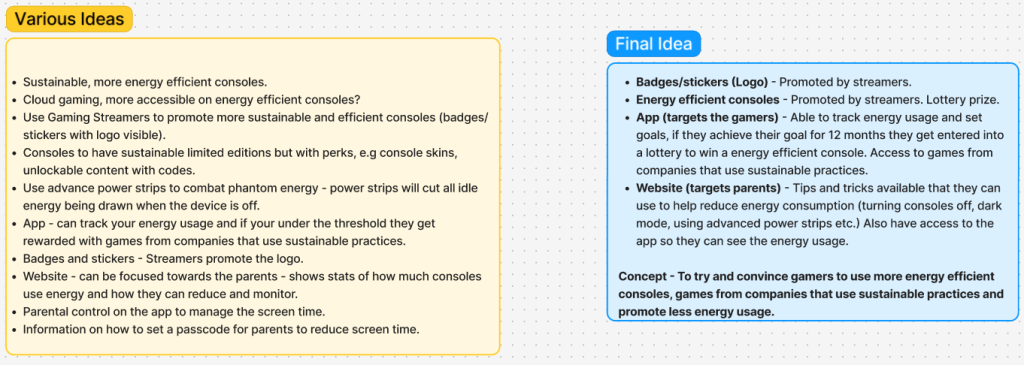
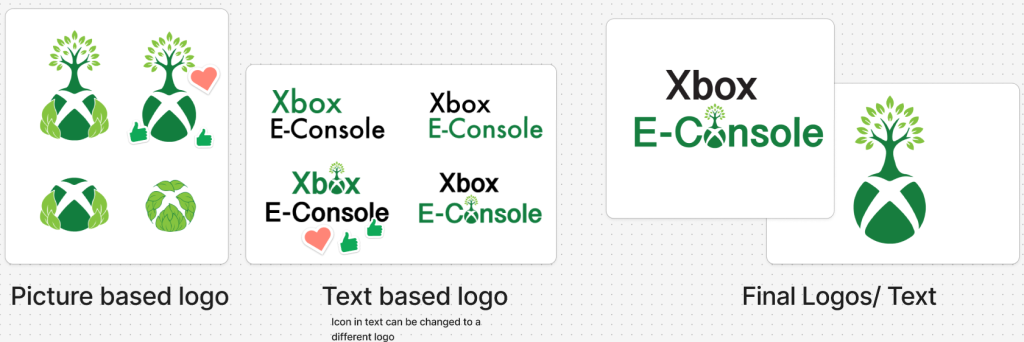
As we progressed with the task, our objective was to come up with additional ideas rather than rely solely on our first thoughts. After evaluating what we had, we divided the workload based on the tasks that needed attention. During this, I took more initiative to enhance communication within the group however we did not explore alternative variations of our original concept and instead continued working with our initial draft. To address this, I made sure that the assets we used had multiple versions and then I encouraged team members to vote on the best design options. By the end of our session, we had developed one text-based logo and one image-based logo. Some team members also began designing a website but was created before a discussion on how we would lay the site out, this highlighted the lack of communication between the group when focusing on single tasks.
For our next meeting, I temporarily joined a different group since I was the only member available from my original team; the task was to discuss ways to improve our concepts and find assets that we think would be helpful to create the product.
Joining this new group allowed me to see different interpretations of the project. We started by discussing what assets we would like to go with our concepts. After gathering ideas, we revisited the project brief to refine our concepts and ensure the assets we had collected were still appropriate – reviewing our ideas was something my first group hadn’t done.
As we discussed our final product, we generated a vast amount of ideas, which ultimately made it challenging to progress. The wide variety of options created made it hard to make a decision within the group as members struggled to select a single concept to focus on. This meant there were more discussions which – whilst valuable for exploring different perspectives- meant we wouldn’t have as much time to create. We found ourselves caught in a loop of creating ideas without a clear path forward, which highlighted the importance of having a clear end goal before generating ideas.
In contrast to my first group, this new team was much more vocal and produced a wide range of ideas, whereas my original group focused on a single concept, which made it easier to decide what was necessary. The different approaches highlighted the importance of collaboration and communication in designing and creating in group projects. Overall, these experiences underscored the significance of constructive feedback and the value of diverse perspectives in the creative process.