Influential Graphic Design
Graphic design has always influenced how people understand information, and one of the most important movements in design history is the Swiss Style -also known as the International Typographic Style. It emerged in Switzerland in the 1950s and became especially dominant during the 1970s. The movement helped shape the foundations of contemporary graphic design by introducing key ideas such as clarity, structure, and legibility, which are still widely used in design today (Big Human, 2025).
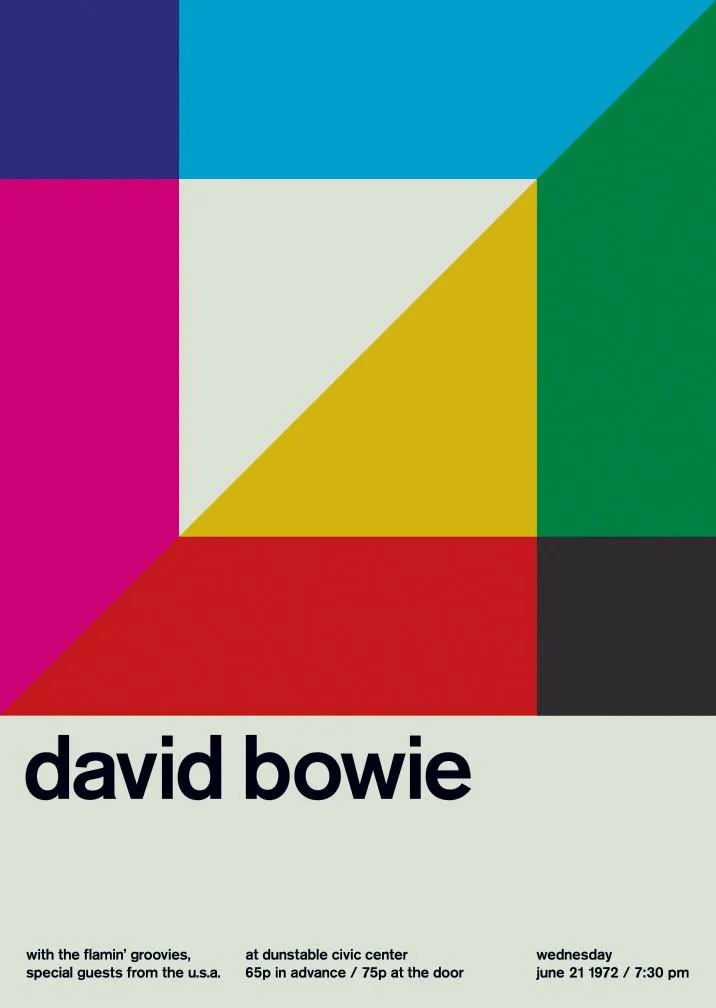
(Budrick, 2020)


(LogoArchive, 2022)
Swiss Style developed during the post-war period, when designers began to move away from overly decorative styles like Art Nouveau and instead focus on more simple and clear communication (Big Human, 2025). During this time, society needed clearer ways to communicate information to wider audiences, especially as global communication and technology were expanding. Because of this, designers aimed to create visuals that could be easily understood regardless of language or cultural background.
One of the main features of the Swiss Style that it has a minimalist and structured approach. the style used grid systems to organise layouts, along with asymmetrical compositions and large amounts of white space to create balance and clarity. (The History Of Visual Communication n.d.) Sans-serif typefaces, particularly Helvetica, became strongly associated with the movement due to their clean and readable appearance.
The style often included geometric forms, documentary-style photography, and left-aligned text to guide the viewer’s eye. Instead of using decoration, the focus was placed on readability and objective communication, making the message the most important element of the design (The History Of Visual Communication n.d.). These features make the design visually engaging while still remaining structured and easy to read. The use of bold but minimal colours and documentary-style photography also supports the clarity of the message (Big Human, 2025).
Designer Paul Rand was influenced by European modernist movements including Cubism, Constructivism and the Swiss Style (Broadbent, 2020). Using these influences, he created the famous IBM logo with the eye, bee and striped “M”, which humanised the technology company and showed how simple visual communication can be highly effective in branding.
Overall, Swiss Style is still relevant today because it is simple and visually engaging . The use of white space, simple shapes and limited colour makes designs visually clear while still being impactful, which works well in modern digital and branding contexts.
REFERENCES:
Big Human (2025). The History of the Swiss Design Style. [online] Big Human. Available at: https://www.bighuman.com/blog/guide-to-swiss-design-style. [Accessed 16/02/2026]
The History Of Visual communication. (n.d.). 09A POST WW2. [online] Available at: https://www.historyofvisualcommunication.com/post-ww2. [Accessed 16/02/2026]
LogoArchive (2022). Eye, Bee, M Logo Design History. [online] www.logohistories.com. Available at: https://www.logohistories.com/p/ibm. [Accessed 16/02/2026]
Zuerich.com. (2020). Swiss Style: Swiss Typography and Graphic Design||Swiss Style: Swiss Typography and Graphic Design. [online] Available at: https://www.zuerich.com/en/art-culture/zurich-avantgarde/swiss-graphics-typography. [Accessed 16/02/2026]
Budrick, C. (2020). Swiss Style: The Principles, the Typefaces & the Designers. [online] PRINT Magazine. Available at: https://www.printmag.com/featured/swiss-style-principles-typefaces-designers/.
Broadbent, G. (2020). Propella | Views | Paul Rand. [online] www.propella.agency. Available at: https://www.propella.agency/views/design-hero-showcase-paul-rand.