Collaborative workshop
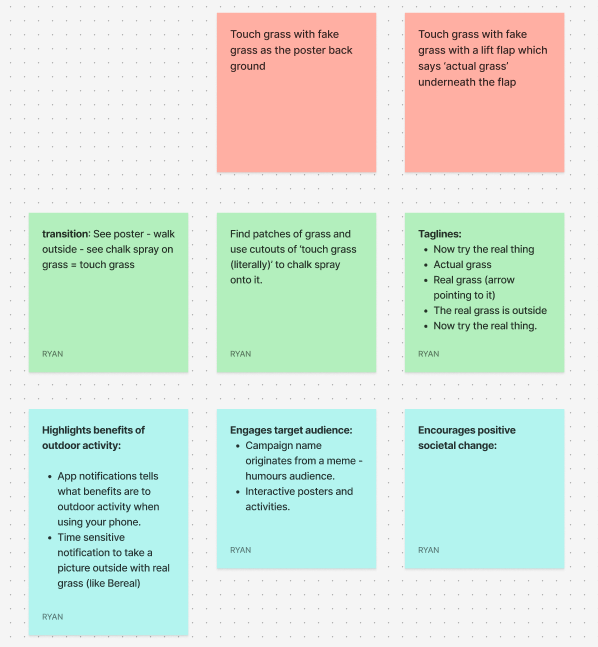
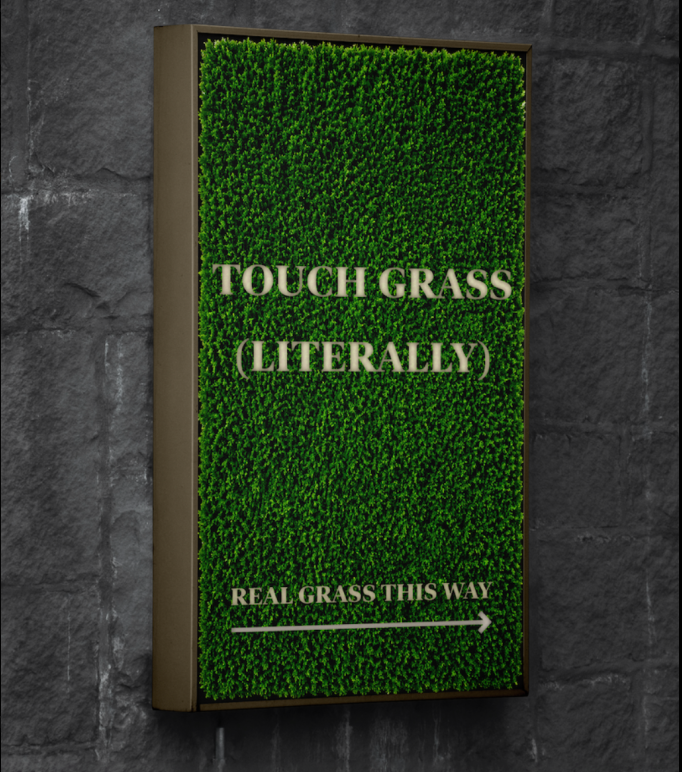
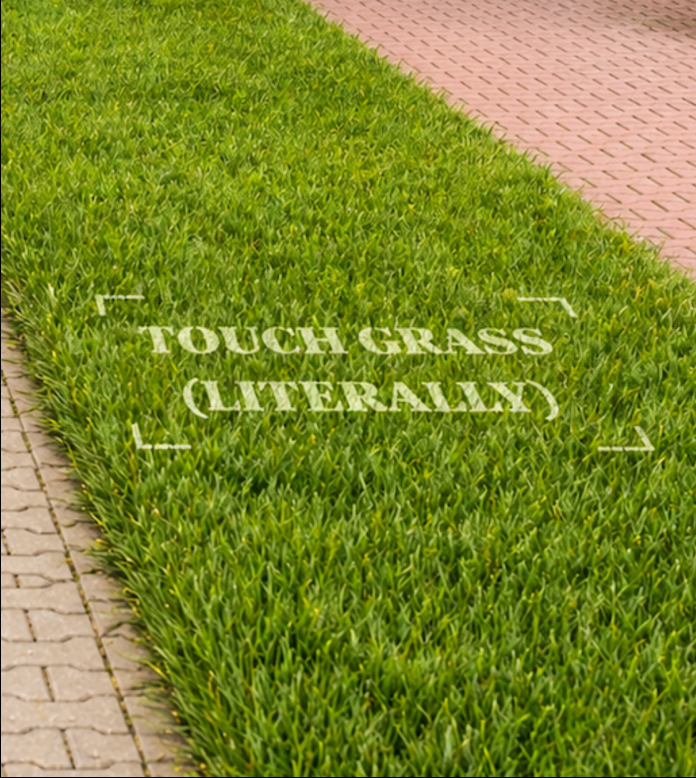
This campaign was created in response to the brief about how graphic design can highlight the benefits of the outdoors and fresh air in a digital age. The main idea was based on the internet meme “touch grass” which is commonly used online when someone is spending too much time on the internet. We decided to turn the meme into a campaign that encourages people to actually go outside, the campaign is called Touch Grass and the core message is simply to go outside.
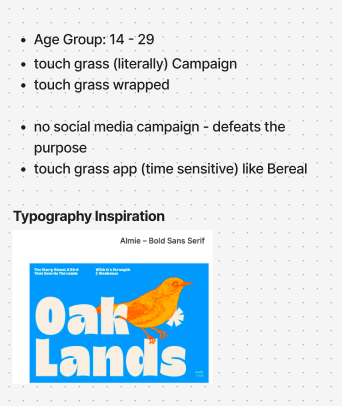
Our chosen audience was ages 14-29, but we mainly focused on ages 14-16, this is because this age group is very influenced by online culture, memes, and social media, so they are more likely to understand and relate to the phrase “touch grass”, they also tend to have high screen time, often around 7.5 to 9 hours a day (Legner, 2021), which links directly to the problem the campaign is addressing. By using humour and a meme they already recognise, the message becomes more engaging and less forced.
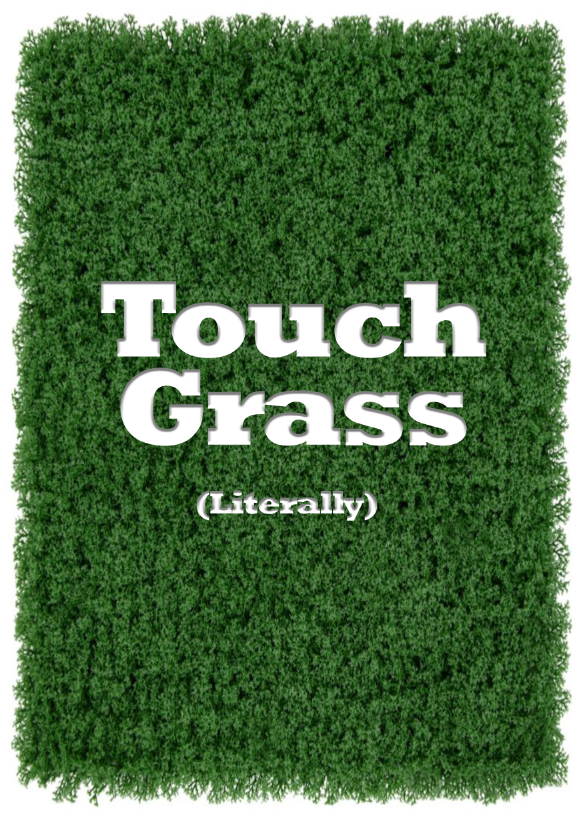
In terms of design decisions, we decided to use bold white text on a faux grass background to create strong contrast and make the message easy to read quickly. The placement of the text is at the top of the poster and the smaller supporting text at the bottom. This helps guide the viewer’s attention while keeping the layout simple. The textured grass background links directly to the phrase “touch grass” and makes the poster more visually engaging, especially in a physical outdoor setting. The use of bold text, clear contrast, and minimal wording makes the design direct and impactful.
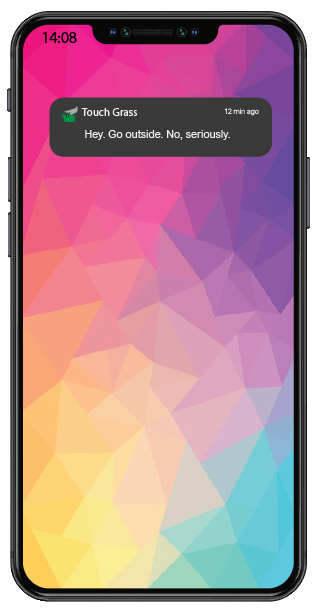
The campaign does not explicitly list the benefits of the outdoors on the poster itself, however the wider campaign idea includes an app inspired by platforms like BeReal, where users would take a photo to prove they have been outside. The app would also include a page explaining the benefits of fresh air and being outdoors, along with notifications that show how time spent outside can improve wellbeing.
Overall, the campaign encourages positive change by promoting outdoor activity in a way that feels relevant to a digitally influenced generation. The humour, pop culture reference, and physical textures make it more engaging than a traditional health poster. The use of faux grass and outdoor placements, such as writing “touch grass – literally” in fields using chalk, also encourages people to physically encounter the campaign outside rather than through a screen. This makes the message more immersive and aligned with the aim of getting people to go outside more frequently.
REFERENCES:
Legner, L. (2021). Kids’ screen time: How much is too much? [online] OSF HealthCare Blog. Available at: https://www.osfhealthcare.org/blog/kids-screen-time-how-much-is-too-much.