Conceptual Development
Hover over images to zoom in.
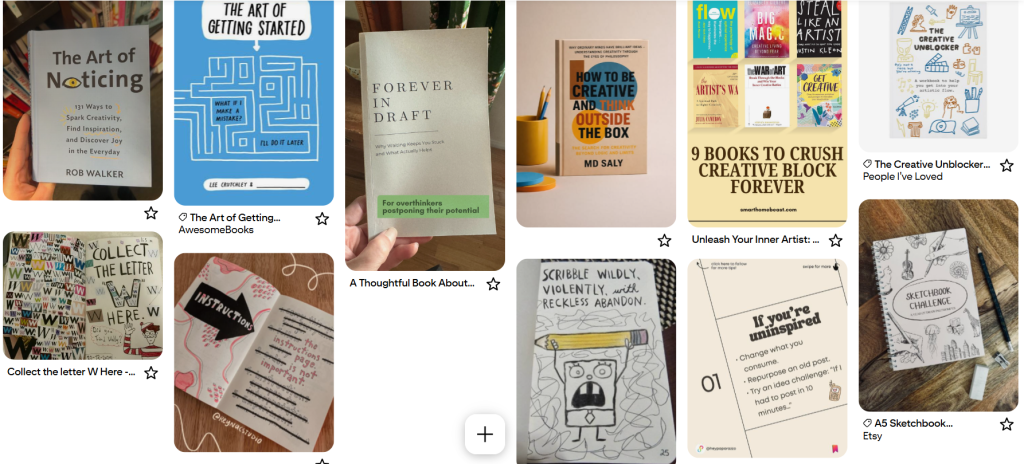
Moodboard
Sketches
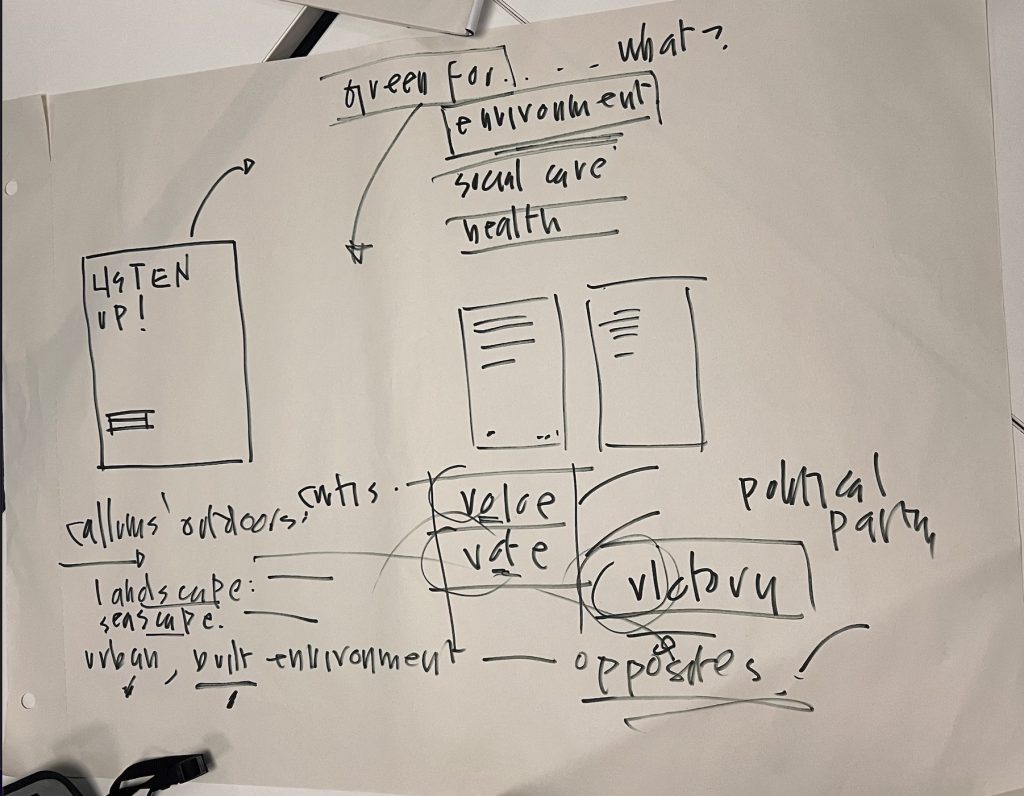
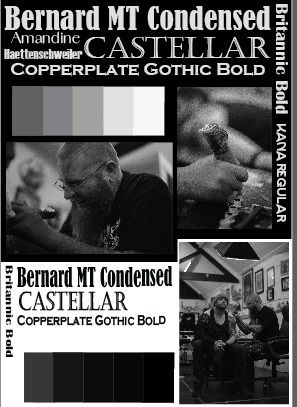
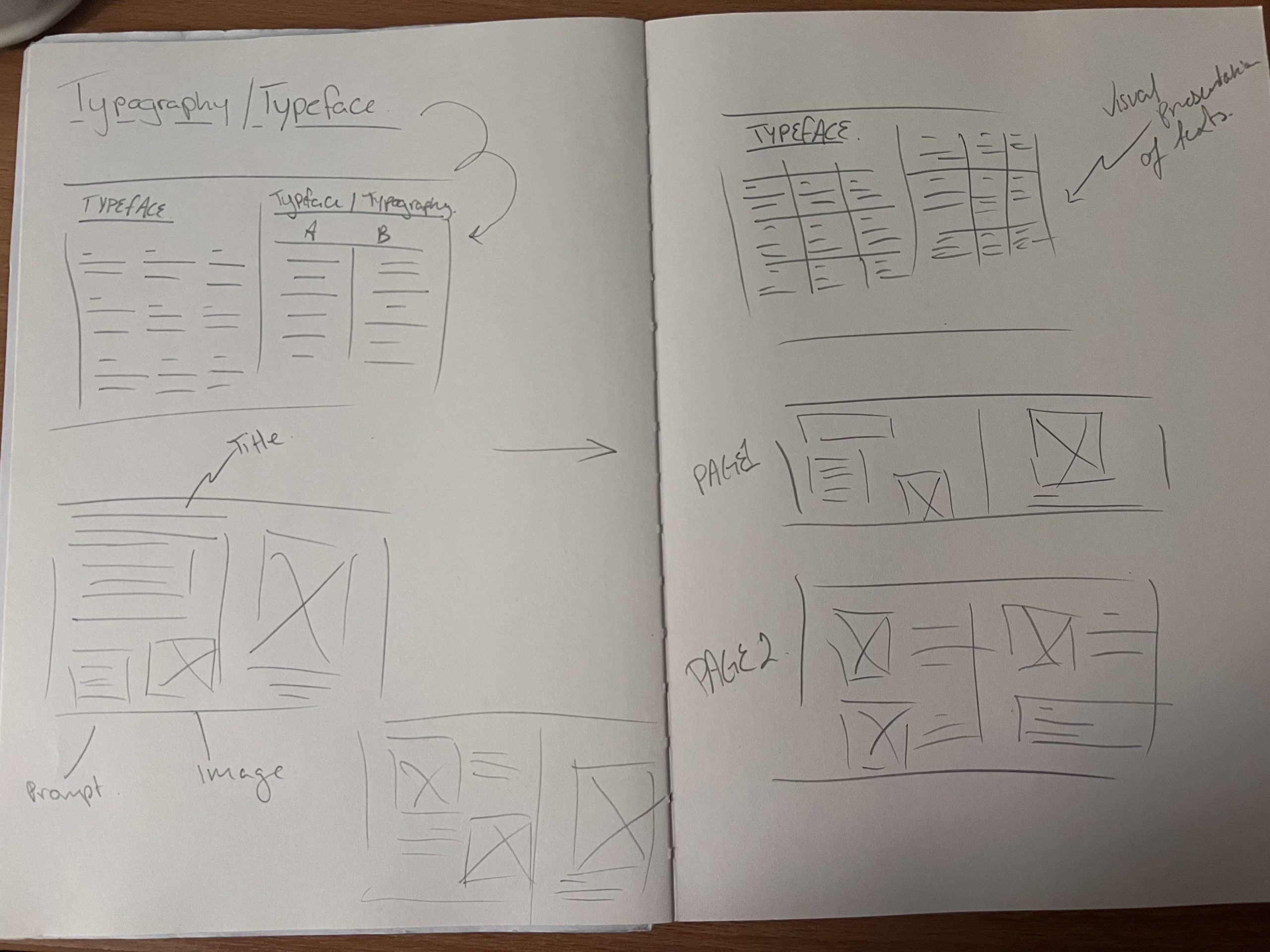
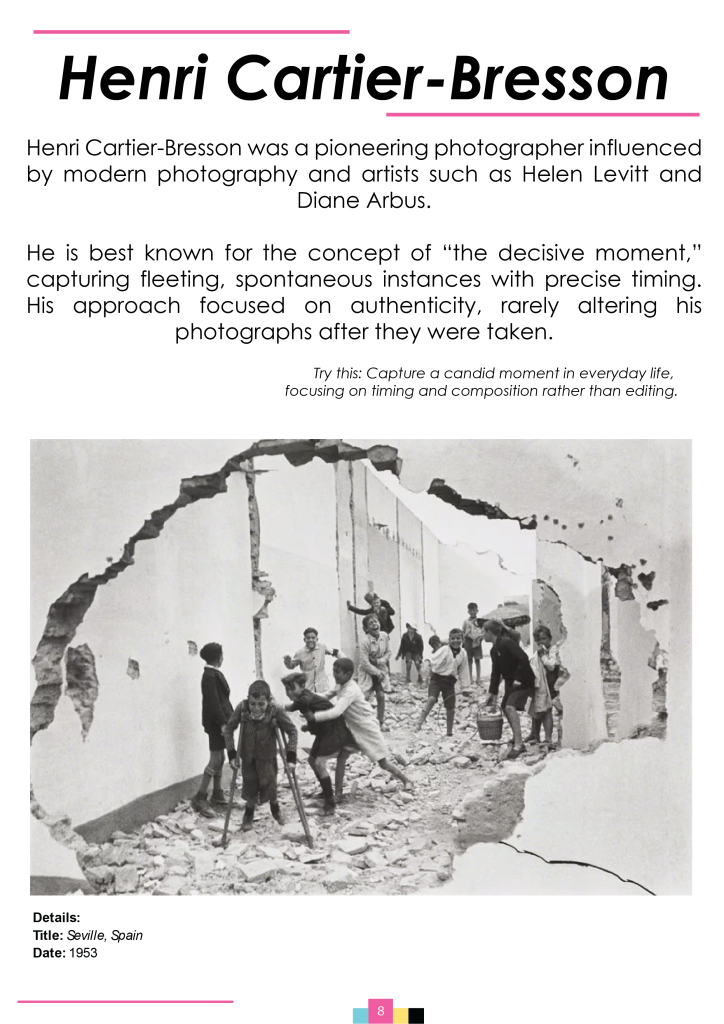
To begin developing my concept, I mapped out initial ideas and visual directions based on how creative block could be represented and alleviated. Early exploration involved sketching, mind mapping, and identifying potential structures for the book. These initial ideas helped me understand how layout, hierarchy, and visual clarity could support users who feel overwhelmed or unsure where to start.
I then began visually developing these ideas by experimenting with different page compositions and layout approaches. I created multiple variations of example spreads, exploring how imagery, text, and prompts could be arranged. Through this iterative process, I found that using a two‑column grid system and adjusting image sizing significantly improved the overall design. This introduced structure and made the layouts easier to navigate, while preventing them from becoming visually overwhelming. Earlier designs were less successful because they lacked a consistent grid, resulting in unbalanced and unclear compositions.
As the concept developed, I refined the visual system by reducing text size, improving hierarchy, and ensuring consistent spacing. I also clarified the structure of the book, establishing a format where each artist is presented across a spread, followed by a prompt that encourages users to apply similar ideas in their own work. This shift transformed the project from a loose collection of ideas into a structured and purposeful design system.
Overall, the conceptual development stage allowed me to explore multiple directions before refining the project into a clear, user‑focused resource that supports idea generation and reduces creative pressure.